19.08.2026 / Cuba Emotions
Havana Photoshoot: Locations, Light, Talent & Production
A practical guide to planning a Havana photoshoot: choose the right location, work with the light, cast current talent and build a realistic production plan.
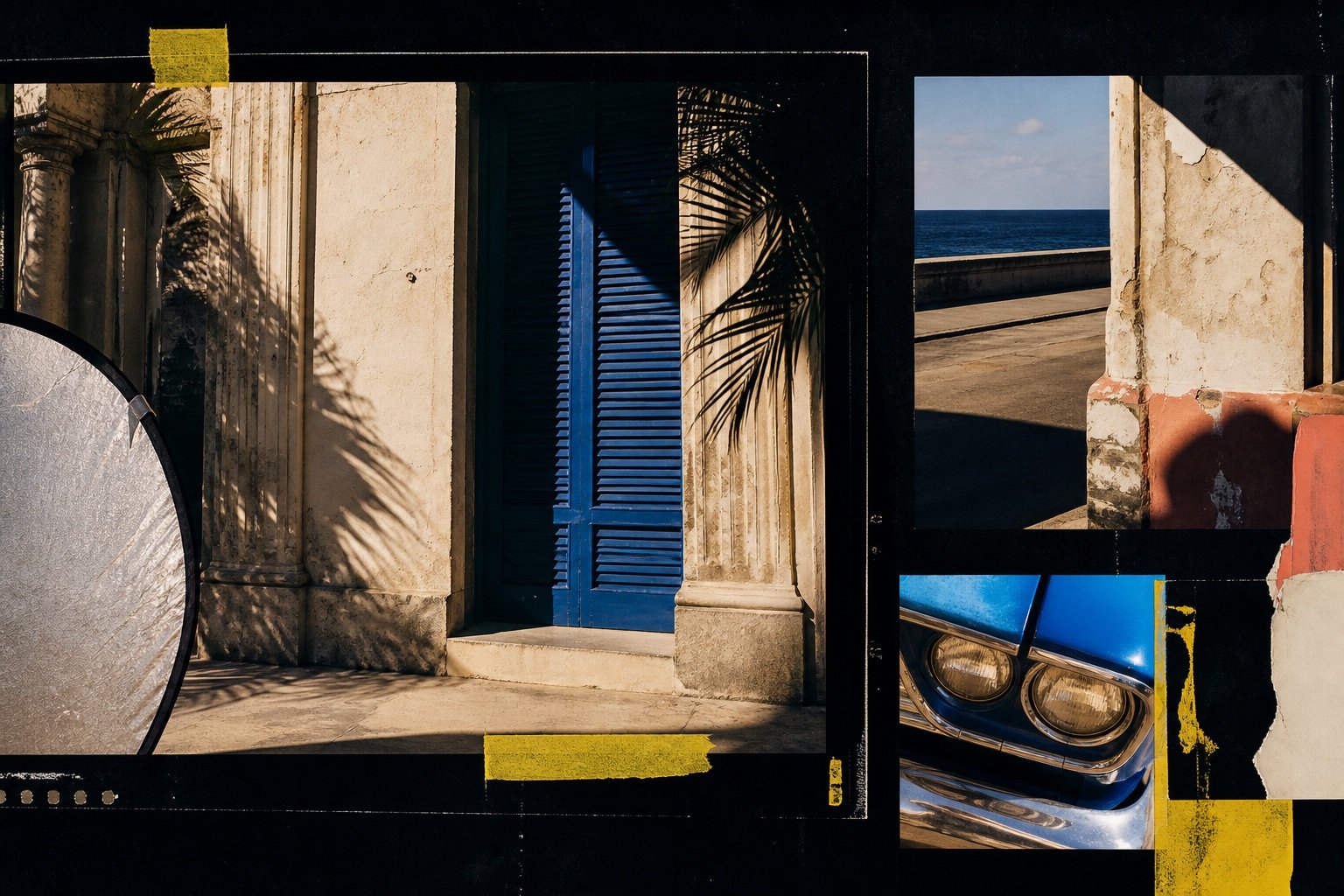
A Havana photoshoot can look effortless on camera and still fail in production. The city offers extraordinary architecture, hard tropical light, sea air, lived-in interiors and unmistakable street texture, but the strongest images begin with a precise brief: what must the photographs communicate, who needs to be on set, what can be confirmed locally and how will the day move?
This guide is for fashion editorials, portraits, campaigns, lookbooks and small creative productions. It explains how to choose a location for its visual function, plan around Havana’s light, cast people who are actually available and leave enough operational margin for a city where conditions can change. It does not present a fixed catalogue of models or promise unrestricted access to any location.
Why Havana works as a photographic location
Havana is not one visual idea. Its power comes from the proximity of very different environments: the arcades and courtyards of the historic centre, the dense everyday streets of Centro Habana, the modernist and eclectic buildings of Vedado, the broader avenues and private residences of Miramar, and the exposed horizon of the Malecón. A production can change its entire visual language without leaving the city.
The architecture is genuinely layered. Cuba’s official tourism portal describes colonial, neoclassical, art nouveau, art deco, eclectic and modernist influences across Havana. UNESCO identifies Old Havana’s original urban pattern, plazas, arcades, balconies, ironwork and internal courtyards as part of the historic centre’s exceptional character. That variety is useful to a photographer only when it serves the concept; collecting landmarks is not the same as creating a coherent story.
There is also a cinematic memory attached to the city. Music videos, fashion images and travel campaigns have repeatedly used its waterfront, rooftops, cars and weathered surfaces. LujoCuba’s editorial piece on Havana as a shooting location for music videos is a useful companion if your brief draws on that screen history. The better creative decision, however, is often to avoid recreating an image everyone already knows.
Use Havana as a language, not as a prop.
The best Havana photoshoot locations depend on the brief
There is no universal list of the ten best spots. A strong location earns its place by solving a visual and practical problem: background, scale, color, privacy, sound, access, holding space, changing facilities or proximity to the next setup. Start with the intended frame and production needs, then shortlist areas.
Old Havana: architectural density and controlled viewpoints
Old Havana provides plazas, narrow streets, arcades, balconies, stone, ironwork and an unusually dense mix of baroque and neoclassical forms. It suits editorials that need historical depth, graphic perspective or a strong relationship between wardrobe and architecture. It is also a working, protected historic centre. Foot traffic, heritage considerations, private thresholds and commercial activity can make a simple-looking frame operationally complex.
Scout the exact block and shooting direction, not just the neighborhood name. Early calls can reduce crowds, but low sun may remain hidden behind buildings in narrow streets. A shaded arcade can be more controllable than an open plaza at midday.
Centro Habana: texture, movement and real street rhythm
Centro Habana offers close façades, balconies, workshops, doorways, traffic and a faster relationship between subject and street. It can produce intimate, energetic frames, but it should never be treated as an aesthetic shorthand for hardship. Do not block entrances, direct residents without consent or turn someone’s daily environment into an uninvited set.
Keep the crew small, make the camera footprint obvious and agree in advance how recognizable people will be handled. If the concept depends on a particular doorway, rooftop or interior, obtain permission rather than assuming that visibility from the street equals production access.
Vedado: modernism, scale and graphic restraint
Vedado can shift the visual register away from the colonial postcard. Broad streets, mid-century buildings, staircases, gardens and cultural spaces can support fashion, portraiture and contemporary campaigns with cleaner geometry. It is a strong option when the clothes or subject need room to lead the frame.
Distances between setups are greater than they appear on a map. Group locations by direction and sun position instead of building a schedule from a list of famous addresses.
Miramar and private residences: privacy and production control
Miramar’s avenues, gardens and larger private properties can offer more control, space for wardrobe and makeup, and a calmer base for client work. A beautiful residence is not automatically a shoot location. Confirm the specific property’s permission, areas included, hours, crew limit, furniture rules, electrical use, noise, visitors and image-use conditions in writing.
For larger productions, a private base can reduce unnecessary movement. It can function as location, holding area and reset point, provided each use has been approved rather than inferred from an accommodation booking.
The Malecón and the coast: horizon, wind and changing conditions
The Malecón gives Havana its most open visual field: horizon, sea wall, sky and long lateral movement. Sunset can be dramatic, but wind, spray, traffic, waves and rapid changes in cloud cover affect continuity. Build a wind-safe wardrobe option, protect equipment and keep the setup light enough to move.
The official Cuba tourism guide highlights the Malecón particularly around sunset, but the useful production window depends on the date, weather, desired direction and where the subject must stand. A sunset call time is not a lighting plan.
Plan the light before the wardrobe
Havana’s daylight can be hard, reflective and fast-changing. Pale stone, painted walls, sea glare and deep interiors create large exposure differences within a short distance. That contrast can become the visual idea, but it should be chosen rather than repaired later.
Early morning
Morning is useful for quieter streets, softer temperatures and long directional light. In the historic centre, buildings can delay direct sun at street level, so a sunrise time alone does not tell you when a façade will light. Scout with a compass or sun-position app and note which side of the street receives light.
Midday
Midday produces hard shadows and overhead light. It is often avoided by default, but it can work for graphic fashion, saturated color, white walls, colonnades or a deliberate flash-led look. If it is not part of the concept, use the middle of the day for interiors, covered arcades, wardrobe changes, transfers and lunch.
Late afternoon and blue hour
Late light brings warmth and dimension to façades; blue hour can separate skin, street lighting and the sky more gently. The window is short. Pre-light, rehearse movement and decide the non-negotiable frame before the light arrives. A four-look schedule rarely fits inside one golden hour.
Humidity, heat and sudden rain also affect makeup, hair, fabrics and electronics. Keep absorbent materials, drinking water, lens cloths, weather covers and a simple indoor alternative close to set.
Models, casting and local crew
A six-year-old model profile is not evidence of current residence or availability. Cuba’s creative community has changed significantly, and many people who once worked locally now live abroad. For that reason, Cuba Emotions does not maintain a public roster that implies permanent representation.
Our approach to casting Cuban models begins with the live brief. We define age range, presentation, movement or performance needs, usage, dates, hours and compensation, then look for suitable people and verify location, interest and availability case by case. A client should approve a current selection, not choose from an obsolete archive.
The same discipline applies to photographers, assistants, stylists, hair and makeup artists, fixers and drivers. “Local crew” is not one interchangeable category. Ask who is confirmed, what each person is responsible for, what equipment they control and which decisions still depend on the final brief.
What a casting brief should include
- Campaign, editorial or project context
- Intended image and video usage, territory and duration
- Shoot dates, fitting requirements and expected hours
- Number of people and relevant presentation or performance needs
- Wardrobe, swimwear, movement, intimacy or product requirements
- Compensation, releases and approval process
- Travel, meals, changing space and transport arrangements
Consent is a production requirement, not paperwork added after the photographs exist. Releases should match the real use of the work and be understood by the person signing them.
Permissions, private property and responsible production
Do not assume that a small crew, a phone camera or a public street eliminates the need to check permissions. Requirements can depend on the location, equipment, commercial purpose, crew footprint, traffic impact, heritage status and whether identifiable people or private property appear in the work.
For every shortlisted setup, identify who controls the space and what must be agreed. Private interiors, rooftops, restaurants, galleries, houses, vehicles and managed venues need explicit approval from the relevant operator or owner. Historic and public locations may require additional coordination. Conditions can change, so confirm the current process locally for the actual production rather than relying on an old blog post.
Responsible location work also protects the edit. Agree whether artworks, brand marks, house numbers, license plates, minors or bystanders can appear. Record required credits. Do not promise a “raw Cuba” aesthetic and then manufacture it by intruding on residents or staging poverty.
Transport, power and the production contingency
A Havana schedule should include transfer time, loading, parking, walking access, heat recovery and a buffer for the unexpected. Two locations that look close can still require a controlled vehicle plan when the crew carries wardrobe, lighting or camera cases.
For productions that need a driver, airport coordination, equipment movement or several timed stops, use a route-led brief rather than requesting a generic car. VIP Car Rental Cuba is the relevant portfolio specialist for chauffeur-led and complex movements; the exact vehicle, driver, operating scope and route still need written confirmation for the production date.
Operational conditions deserve the same attention as aesthetics. At this guide’s 19 August 2026 review, the UK FCDO advised against all but essential travel to Cuba and reported serious electricity and fuel disruption. Travelers should check the current advice that applies to them. For a production, power, charging, refrigeration, transport and backup plans should be reconfirmed close to the working date.
- Charge batteries and duplicate essential media before call time
- Confirm power availability and permitted load at every interior
- Carry a small lighting plan that can work without mains power
- Group locations to reduce unnecessary mileage and resets
- Keep water, meals and a shaded holding point in the schedule
- Prepare one rain-safe or indoor alternative
- Back up files before the crew separates at the end of the day
People subject to United States jurisdiction have an additional planning layer: U.S. tourism transactions involving Cuba are not generally authorized. OFAC lists specific categories and conditions for authorized travel, including certain journalistic activity, but the correct basis depends on the traveler and project. Confirm the current rules independently before committing travel or production funds.
How to brief a Havana photoshoot
A useful first message does not need a finished call sheet. It does need enough information to separate creative ambition from operational assumptions. Send the following:
- Project type, brand or publication, and the story the images must tell
- Preferred dates plus any flexible alternatives
- Final deliverables: stills, video, vertical social, interviews or behind the scenes
- References with notes explaining what matters in each image
- Talent requirements and usage
- Preferred environments, not only named landmarks
- Crew traveling to Cuba and roles to source locally
- Equipment plan, special power needs and data workflow
- Approximate production range and approval deadline
- Any legal, accessibility, privacy or brand-safety constraints
From there, the work becomes specific: shortlist locations, identify permission questions, source current talent, match crew, define movement and build a call sheet with contingencies. The honest answer may be that a requested combination cannot be confirmed exactly as imagined. Discovering that before travel is part of good production.
Havana photoshoot FAQ
What are the best places for a photoshoot in Havana?
Old Havana works for dense historic architecture; Centro Habana for close street texture; Vedado for modernist scale; Miramar and approved private residences for greater control; and the Malecón for horizon and coastal light. The best choice depends on the concept, permissions, crew size, timing and practical needs.
Can Cuba Emotions book a specific model shown on the old website?
No historical profile should be treated as currently represented or available. Cuba Emotions sources and verifies talent for each live brief. If a particular person is requested, their current location, interest, availability and image-use terms would need to be confirmed independently.
Do I need permission to photograph in Havana?
Potentially. The answer depends on the space, purpose, equipment, crew footprint and people or property appearing in the images. Obtain private-property approval and confirm current local requirements for public, protected or commercially managed locations.
When is the best light for Havana photography?
Early morning and late afternoon often provide more directional light and lower heat, while midday can suit a deliberate hard-light or flash concept. Buildings, street direction, cloud, season and the required background matter more than a generic golden-hour rule.
How far in advance should a production begin planning?
Begin as soon as the dates, usage and core creative direction are known. Casting, private locations, permissions, transport and specialist crew all require current confirmation. More time creates alternatives; it does not turn an unverified option into a guarantee.
Bring us the brief, not a shopping list.
Tell Cuba Emotions what the images need to achieve. We will separate what can be sourced now, what requires confirmation and what should be redesigned before the production travels.
Editorial review: 19 August 2026. Sources consulted include UNESCO’s Old Havana and its Fortification System, the official Cuba Travel guide to Havana architecture, current UK travel advice for Cuba and the U.S. Treasury’s Cuba sanctions travel guidance. Operational and regulatory conditions can change; verify them again for the production date.